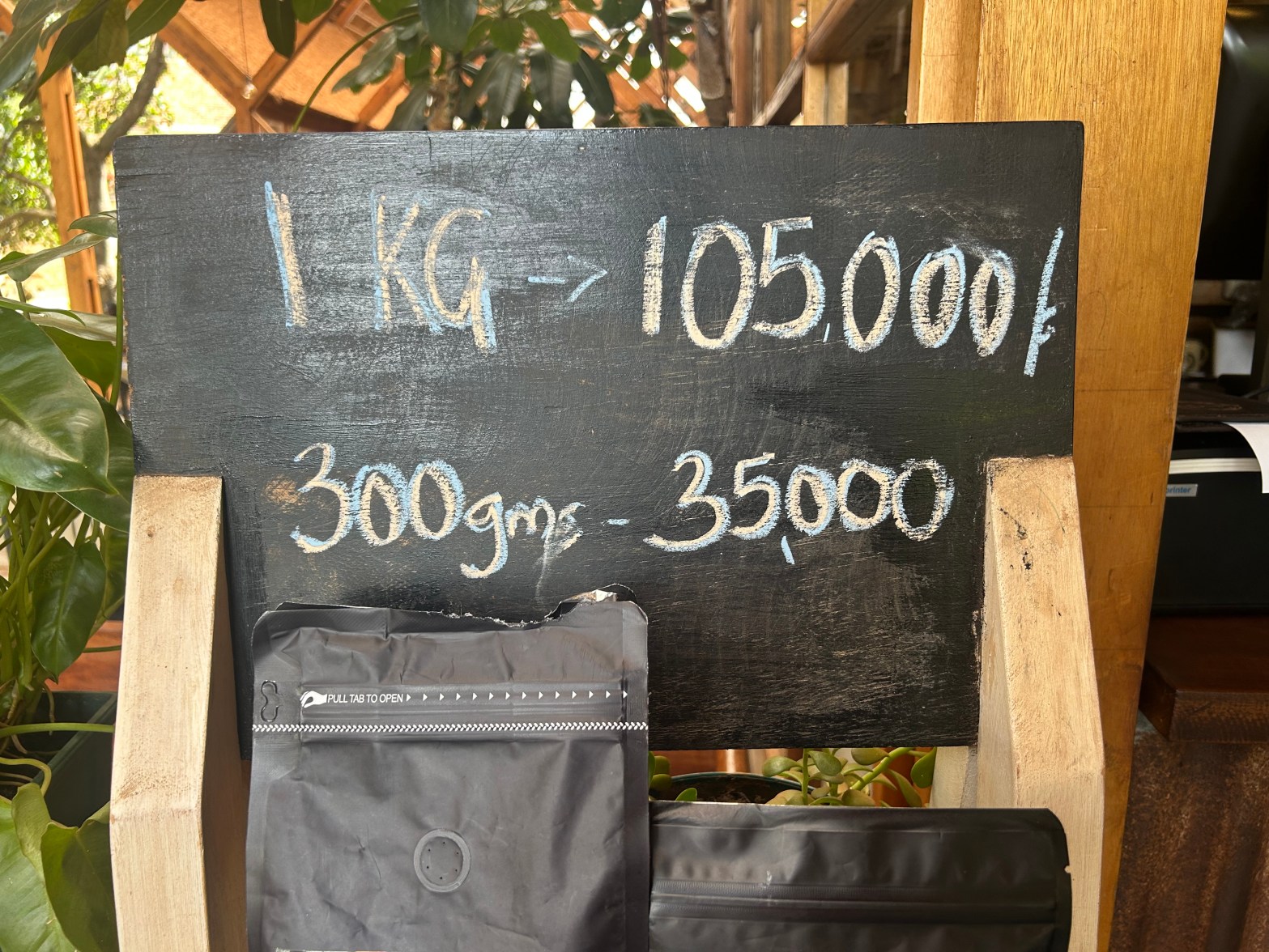
It is told that the modern price tag was developed in 1861 by one John Wanamaker, a merchant from Philiadephia, USA. Before this point, every transaction with every merchant one encountered was a negotiation. Someone who was wealthy would end up paying more because the merchant could size them up and charge them more. Somebody who was a skilled negotiator and had the time would pay less, because they would negotiate the price down to one they are willing to pay.
How the story goes, is that this John had the belief that, if all people were made equal under God, then all people should pay the same price for the goods that they bought. To him, it was an injustice that a person would pay different prices for exactly the same good or service. The concept grew in popularity among a consumer base that preferred predictability and trust, and now, for many formalised businesses in the world, the price tag is the norm.
I’m writing this post from Kampala Uganda, where there are many informal businesses who employ negotiation for every transaction. For someone like me who is not based here and is therefore not familiar with the normal prices of goods, I end up paying more. Yesterday, I took a boda-boda (a motorbike taxi) which cost me 20 000 Ugandan Shillings. When I arrived at my destination, I asked the people there how much I should’ve paid. They said probably 5 000 Ugandan Shillings. A 400% increase for speaking with a different English accent to the general public, and being unfamiliar with the local prices.
This is why apps like SafeBoda, Faras and Uber are so useful. It’s not their ability to hail drivers. The drivers are everywhere and so one just needs to walk onto the road and they will find one. It’s not in some of the safety features that they boast of, such as passenger helments for the motorbikes. Most drivers who were hailed online did not in fact have passenger helments. It is actually in the transparency of the pricing, knowing that what I’ll be paying is the same as what anybody else will be paying around me. Even if it takes longer for the driver to arrive than if I was just to pick a provider on the road, the certainty that I will not be taken for a ride is assuring. The knowledge that I’ll be treated justly, just like my neighbour.
With the increase in data-collection, data sharing, and processing power of devices, retailers around the world are starting to employ dynamic pricing. Digital price tags are placed next to goods, and dynamically change based on who approaches. Based on information collected about you, including your preferences, your previous buying history and your buying habits, as well as your internet browsing history, a price is determined that you’d likely be ok with. Therefore, if you’re a mother with a baby, a set of baby nappies may cost more than if you’re just a guy who is buying for your friend’s nappy braai, as the mother would need them more than the friend. Or a pregnancy test may cost more for someone who recently bought the morning-after pill.
Technological advancement is not necessarily neutral. Just as an innovation like the price tag and fixed pricing brought about a degree of justice, an innovation such as the easier and faster processing of large datasets of personal data can bring about a degree of injustice. We can sit back in defeat and think that there is nothing more we can do. Or we can be more cautious about the terms and conditions that trade our personal data for the virtual lottery of loyalty points and supposed efficiencies.

 Patrick Kayongo